Question & answer
What Temperature Should a Chicken Coop Be in Winter?
There is no sourced target temperature for a winter coop with adult chickens. Of six university extension services read for this site, only one names a number: the University of Minnesota Extension recommends supplemental heat once the temperature inside the coop falls below 35 °F. That is a lower threshold, not a temperature to heat the coop to. The others describe conditions instead: dry, draft-free and ventilated.
Straight answer
A winter coop for adult chickens has no ideal temperature in the extension literature. The only figure is the University of Minnesota's 35 °F, measured inside the coop at the height of the nest boxes or the lower roost, as the point below which it recommends adding heat. Maryland, New Hampshire, Wisconsin and Ohio State name no number. Aim for a dry, draft-free, ventilated coop, not for a reading on the thermometer.
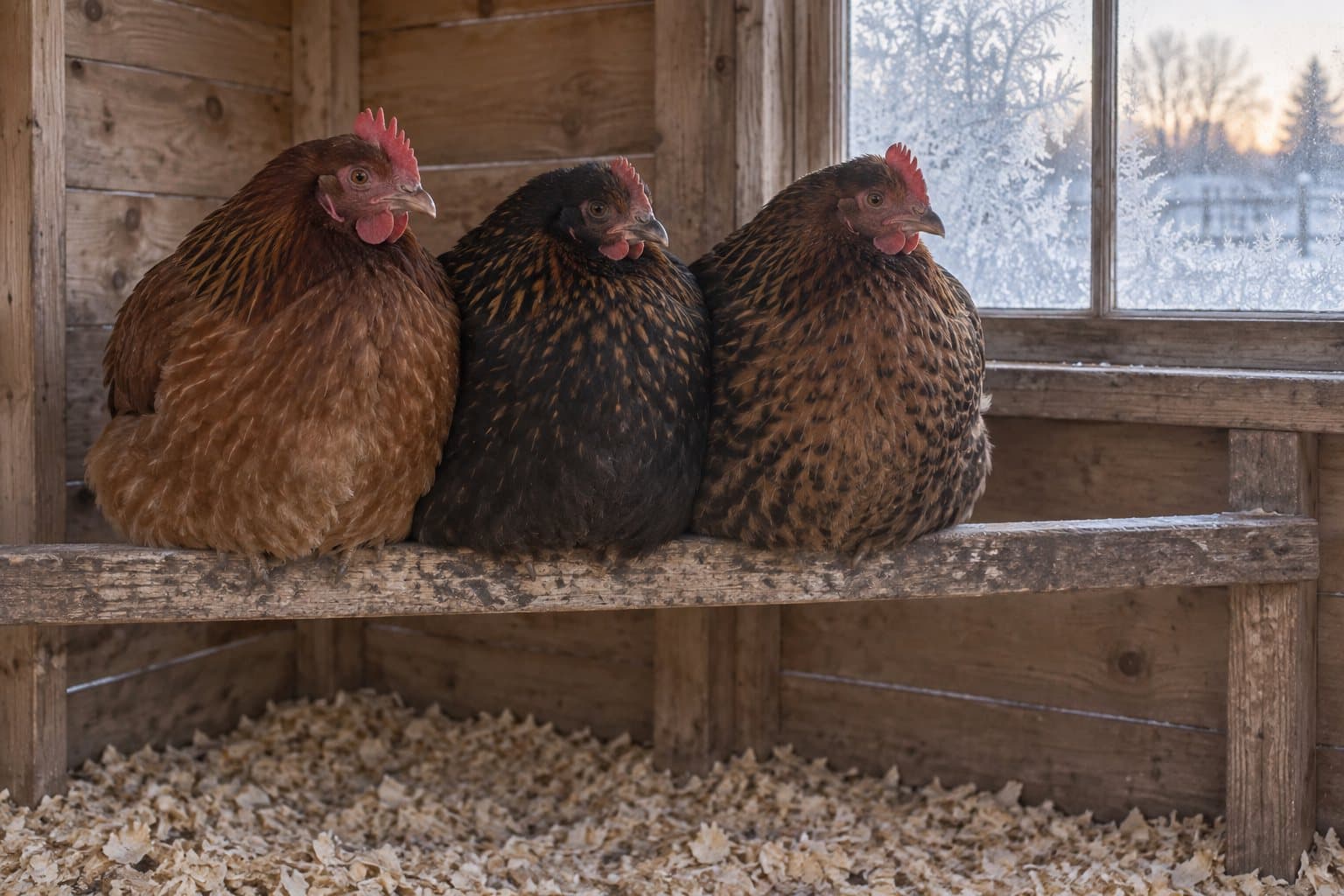 AI-generated
Questions keepers ask
What is the ideal chicken coop temperature?
For adult birds, no extension service read for this site gives one. The temperature charts that circulate online are mostly brooder charts for chicks. The University of Maryland Extension draws the line clearly: young birds need a source of heat to survive and grow, while adult birds that are protected from wind and wet should not need additional heat. Brooder figures do not apply to feathered adult hens.
Should I heat my chicken coop to above freezing?
No source asks for that as a goal. The University of Minnesota Extension recommends adding heat when the inside reading falls below 35 °F, and three other extension services advise against supplemental heat for protected adult birds altogether. Ohio State University Extension warns against excess heat when heaters are used. A radiant panel warms the birds next to it and is not built to hold the coop air at a set temperature.
Where should I measure the chicken coop temperature in winter?
Inside the coop, at the height of the nest boxes or the lower roost. That is where the University of Minnesota Extension takes the reading its 35 °F recommendation refers to. An outdoor thermometer or the weather forecast shows a different number, and a thermostat outlet measures the air at the outlet, not at the roost.
Sources we read
- University of Minnesota Extension: Caring for chickens in cold weather
- University of Maryland Extension: Winter Weather and Small Flocks (FS-1133)
- Ohio State University Extension: Winter and Your Backyard Chickens (ANR-66)
- University of New Hampshire Extension: How should I take care of backyard chickens in winter?
- University of Wisconsin–Madison Extension: Preparing for Winter
- Bangor Daily News: heat lamps and coop fire risk, with University of Maine Cooperative Extension
Keep reading
- ExplainerDo chickens need heat?Do chickens need heat in the winter? Three extension services advise against it, one names 35 °F inside the coop, two say it depends. The sources side by side.
- ExplainerHow cold is too cold?How cold can chickens tolerate? No extension service names a lethal temperature. The one figure that exists, the signs of cold stress, and what makes cold risky.
- ExplainerCoop ventilationChicken coop ventilation in winter: where vents go, how to tell ventilation from a draft, and the signs of too little air, based on six extension publications.
- Buying guideHeaters with thermostatA chicken coop heater with thermostat is either a panel with a built-in sensor or a plain panel on a thermostat outlet. What each one measures, and our pick.
- Question & answerHow Much Does It Cost to Run a Chicken Coop Heater?A 150-watt coop panel uses 2.1 kWh in a 14-hour night. The formula, the rated watts of panels and heat lamps, a calculator, and what lowers the bill.
Who is behind this page
chickencoopheater.com Editorial Team
Coop heat, winter water and the sources behind both
We are the editorial team at chickencoopheater.com. We read what university extension services, the NFPA and manufacturers publish about heating a coop and keeping water liquid, and turn it into plain-English buying advice with the sources on every page.
- Extension and fire-safety sources named
- Manufacturer data and manuals compared
- Disagreements between sources shown
- Compared by manufacturer data