Skip to content
Chicken Coop Heater

Winter coop advice with the sources shown.

Menu

How-to

How to Keep Chickens Warm in Winter: Eight Steps Before Any Heater

Chickens keep themselves warm with their feathers and their feed. Your part is to keep them dry and out of the wind: block drafts at roost height, leave the vents under the roof open, bed the floor deeply, give them a flat wooden roost, plenty of feed and water that is not frozen. A heater comes last, and three of six extension services advise against one for protected adult birds.

by the editorial team updated October 11, 2026 7 min read

Disclosure: This page contains paid links to Amazon, marked with * or “paid link”. If you buy through them, we earn a commission at no extra cost to you. As an Amazon Associate I earn from qualifying purchases. This site is financed by these commissions; products are selected by the criteria on our methodology page. How we evaluate · Learn more

The short version

Keep chickens warm in winter by protecting their own body heat: stop wind at bird height, keep high vents open so moisture escapes, lay several inches of dry bedding, use flat wooden roosts so feathers cover the toes, feed freely with a little scratch grain in the late afternoon, and keep water liquid. Let the birds get used to the cold gradually. Extension services disagree on heaters, and all of them put these steps first.
Jump to a section
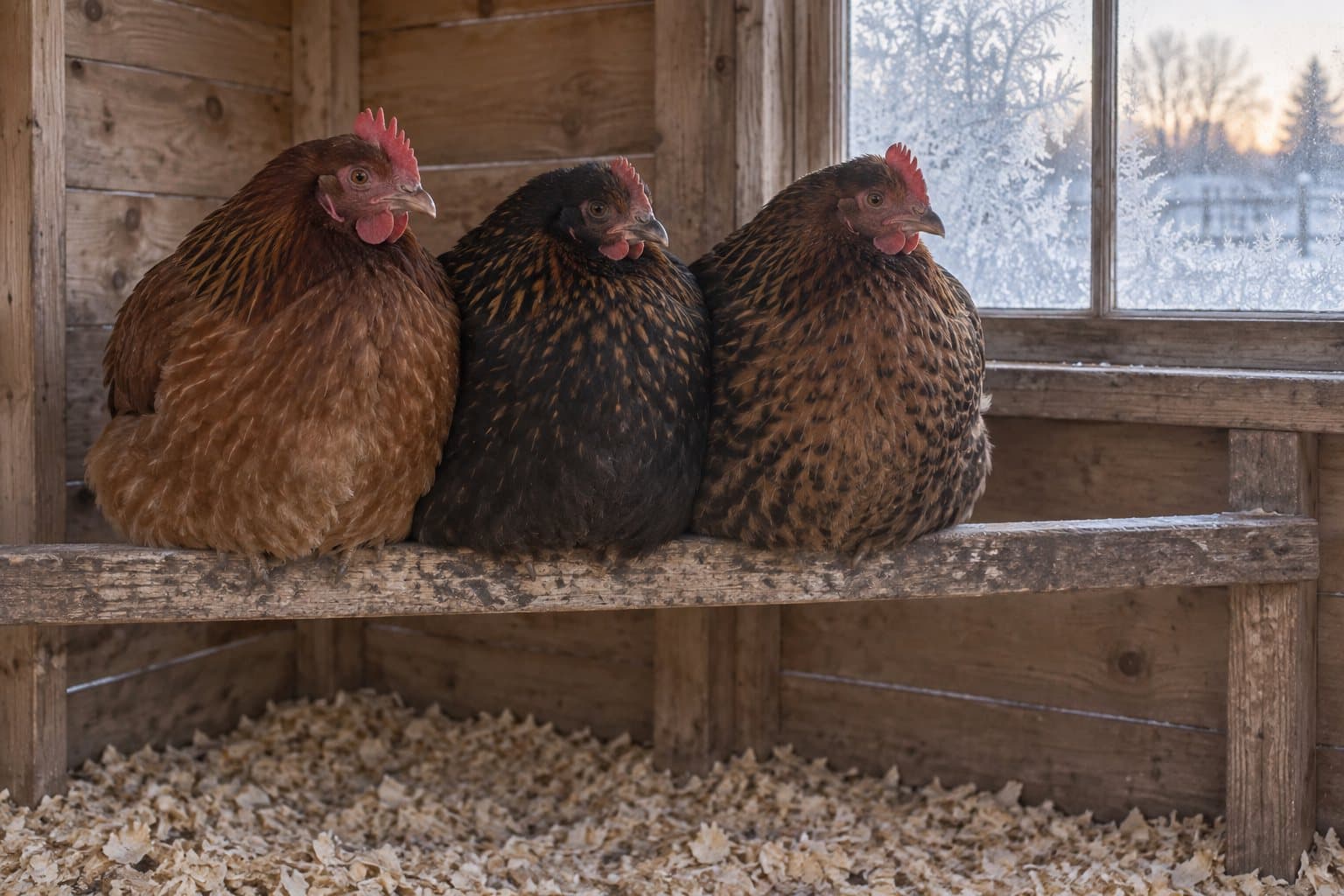
Three fluffed-up hens sitting close together on a wooden roost in front of a frosted coop window (AI-generated illustration)AI-generated

The idea: keep the heat the birds already make

A hen in winter plumage is a small, well-insulated heater of her own. The University of New Hampshire Extension describes chickens as fairly cold-hardy because of their down layer. What takes that warmth away is not cold air as such. Ohio State University Extension names the combination that causes trouble: cold together with drafts and humidity. So keeping chickens warm is mostly a matter of keeping them dry and out of moving air.

This page is the practical routine for that. Whether a heater is needed at all is a separate question on which the sources disagree. It is laid out under do chickens need heat in the winter. If you have already decided to heat, the method is under how to heat a chicken coop.

MeasureWhat it protectsNamed by
Wind blocked at bird heightBody heat on the roostMaryland, New Hampshire, Ohio State
Vents open near the roofDry air, less frostbite riskMaryland, New Hampshire, Wisconsin, Ohio State
Deep, dry beddingFeet and floorMaryland, New Hampshire, Wisconsin, Ohio State
Flat wooden roostToesMaryland, New Hampshire
Feed at all times, scratch late in the dayHeat from digestionMaryland, New Hampshire, Ohio State
Liquid waterFeed intake and healthAll of them
Gradual acclimationCold toleranceOhio State, Maine

Step by step

  1. Stop the wind at bird height

    The University of New Hampshire Extension considers protection from wind the bigger consideration, ahead of insulation, because a cold draft strips birds of their natural warmth. The University of Maryland Extension advises sealing cracks and holes that blow fresh air directly onto the birds, with spray foam or a thick plastic sheet or tarp over problem areas. Ohio State suggests heavy plastic or a tarp as a temporary wall on open fenced sides, and adds that it should not reach the roofline, so that air can still move. A clear tarp sold for coop winterizing* (paid link) does this job and lets daylight through.

  2. Keep the vents under the roof open

    This is the step keepers get wrong when they try to hold warmth. Chickens breathe out moisture and their droppings are wet. Ohio State states that humid air raises the risk of frostbite more than drier air does, and that poor ventilation lets ammonia build up. Maryland asks for a vent or opening near the roof or ceiling. New Hampshire places vents on a side away from the prevailing wind. Details are on the page about chicken coop ventilation.

  3. Bed the floor deeply and keep it dry

    Maryland calls three to four inches of pine shavings or straw good insulation. New Hampshire recommends four to six inches where the coop floor is open to the ground, and bedding in an enclosed run as well. The University of Wisconsin–Madison Extension says to remove obviously wet litter and that dry bedding can stay through winter. Ohio State adds a caution: deep bedding can raise humidity, so mix or fluff it regularly and check moisture every day.

  4. Give them a flat wooden roost

    Maryland advises against metal and plastic pipe, which conduct cold, and recommends a flat surface such as a two-by-four so that birds can cover their feet with their feathers. New Hampshire asks for about 9 to 12 inches of roost space per chicken. Ohio State names 6 to 8 inches. The figures differ, the principle does not: every bird needs a place off the floor.

  5. Feed more, and feed late

    According to New Hampshire, chickens may eat up to 25 percent more feed in cold weather. Maryland asks that feed be available at all times. Three services suggest a small amount of scratch grains late in the day to help the birds generate heat overnight. Wisconsin warns against overdoing high-energy extras, because they can unbalance the diet. New Hampshire reminds keepers to provide grit when straw covers the ground.

  6. Keep the water liquid

    A bird that cannot drink eats less. Ohio State recommends changing water twice a day in winter and checking again in the evening. With an outlet at the coop, a heated chicken waterer takes that work away. Fix leaking waterers, because spilled water ends up as humidity in the coop air.

  7. Let the birds acclimate and watch them

    Ohio State advises letting chickens adjust to cold naturally as winter approaches, because that builds their tolerance. New Hampshire lists the signs that a bird is struggling: huddling, lifting a foot, fluffing its feathers again and again. Its advice in that case is to check for wind leaks and ventilation problems, add bedding and make sure feed and fresh water are available. What the signs mean is covered under how cold is too cold for chickens.

  8. Decide about heat last

    Maryland names bantams and molting hens as birds that may need supplemental heat. Wisconsin notes that a small flock cannot warm its coop the way a large one does. If your flock is one of these cases and the first seven steps are done, a low-wattage radiant panel near the roost is the lower-risk way to add warmth. It needs a fixed outlet with ground-fault protection. It is not free of risk: New Hampshire judges the fire risk of a heat source in a coop as too high in most circumstances.

Warm, not hot: why overheating is a mistake too

The second half of the question matters as much as the first. A coop that is heated to room temperature is not what any source asks for. Ohio State lists excess heat and carbon dioxide buildup next to fire among the risks of heaters. Birds that live in a warm coop do not acclimate, and they still have to go out into the run.

There is also the question of what happens when the power fails. This site found no primary source that measures that risk, so it makes no claim about it. The cautious reading of the sources is simple: aim for dry and draft-free, and treat added heat as a small local help for the birds that need it.

Our pick for coop heatAd

Cozy Products

Cozy Coop 150 W panel

A 150-watt flat radiant panel from an established brand that warms the birds next to it instead of the whole coop.

Why here: If step 8 applies to your flock, this 150-watt panel warms the birds sitting next to it rather than the whole coop. Its manufacturer documents wattage, mounting and an ETL listing.

Best for: Keepers who have decided to add gentle heat near the roost and want a panel with a manufacturer-documented listing mark.

What speaks for it

  • ETL-listed for zero clearance, according to the manufacturer
  • Mounts on a wall through keyhole slots or stands on the included feet
  • 150 W, against the 250 W of a typical heat lamp bulb
  • Cord is coil-shielded, per manufacturer

What to know first

  • No thermostat: a cord switch sets half or full power (instruction sheet), so it runs whenever it is switched on unless you add a thermostat outlet
  • The instruction sheet says “household use only” and dry areas only, while the NFPA asks for equipment made for agricultural or commercial use
  • 6 ft cord: needs a fixed outlet close by, because extension cords do not belong in a coop (NFPA)
  • Warms only birds within reach of the panel, not the coop air
  • Still a heat source next to bedding and dust: lower risk than a lamp, not risk-free
Type
Flat radiant panel
Power
150 W, 120 V
Size
19 × 8 × 1 in (wall mount)
Thermostat
none; cord switch for half or full power, over-temperature regulator (instruction sheet)
Mounting
Wall or free-standing
Listing mark
ETL, zero clearance (manufacturer)
Cord
6 ft
Weight
3.2 lb

Typical mistakes

  • Sealing the coop like a cooler. Moisture stays in, and damp cold is harder on combs than dry cold.
  • Wrapping the run to the top. Leave a gap under the roofline.
  • Metal or plastic roosts. They conduct cold to the feet.
  • Scratch grains as the main feed. They are an evening extra. The complete feed stays available all day.
  • A heat lamp as the quick answer. The Maine Fire Marshal's Office names heat lamps first among the causes of coop fires.
  • Treating a weak bird with a heater. A sick or injured bird belongs with a veterinarian. This site gives no veterinary advice.

Where to go from here

Insulation is the next question after wind and bedding. What the sources say about it is on the page about the insulated chicken coop. The whole fall job list is under winterizing a chicken coop. An overview of heaters, for the flocks that need one, starts on the chicken coop heater home page. The short checklist for water, feed, light and eggs is under chickens in winter, building the bedding up through the cold months is described under the deep litter method, and ready-made tarps are covered under winter covers for coops and runs.

Questions keepers ask

How do chickens stay warm in winter?

With their plumage and their metabolism. The University of New Hampshire Extension describes chickens as fairly cold-hardy thanks to their down layer, with larger breeds generally the hardiest. On a flat roost a bird can cover its feet with its feathers, as the University of Maryland Extension notes. Digesting feed produces heat, which is why the sources ask for feed to be available at all times in cold weather.

How do you keep chickens warm at night?

Night is when the birds sit still on the roost, so the roost is what counts. Keep it out of the draft, make it of wood with a flat surface, and give every bird room on it. A small ration of scratch grains in the late afternoon is suggested by the extension services of Maryland, New Hampshire and Ohio State to help the birds produce body heat overnight.

How do I keep a chicken coop warm without a heater?

By holding on to the heat the birds produce. Seal cracks and holes that let wind blow on the birds, cover open wire sides with heavy plastic or a tarp that stops short of the roofline, and bed the floor deeply. Ohio State University Extension notes that an insulated coop can maintain warmth without electricity. Ventilation near the roof has to stay open in every case.

Can a chicken coop be too warm in winter?

The sources warn about overdoing it. Ohio State University Extension asks keepers to let birds acclimate naturally as winter approaches and lists excess heat, carbon dioxide buildup and fire among the risks of space heaters, radiant heaters and heat lamps. A coop sealed tight to hold warmth also holds moisture and ammonia, and humid air raises the risk of frostbite more than dry air does.

Should I close the vents to keep the coop warm?

No. Ohio State University Extension puts it this way: do not completely eliminate ventilation, but control the airflow. The University of Maryland Extension asks for a vent near the roof or ceiling so that moisture and ammonia can escape, with incoming air mixing with warmer air before it reaches the birds. Close the holes at bird height, not the ones above their heads.

Sources we read

Keep reading

Who is behind this page

chickencoopheater.com Editorial Team

Coop heat, winter water and the sources behind both

We are the editorial team at chickencoopheater.com. We read what university extension services, the NFPA and manufacturers publish about heating a coop and keeping water liquid, and turn it into plain-English buying advice with the sources on every page.

  • Extension and fire-safety sources named
  • Manufacturer data and manuals compared
  • Disagreements between sources shown
  • Compared by manufacturer data

About us How we evaluate